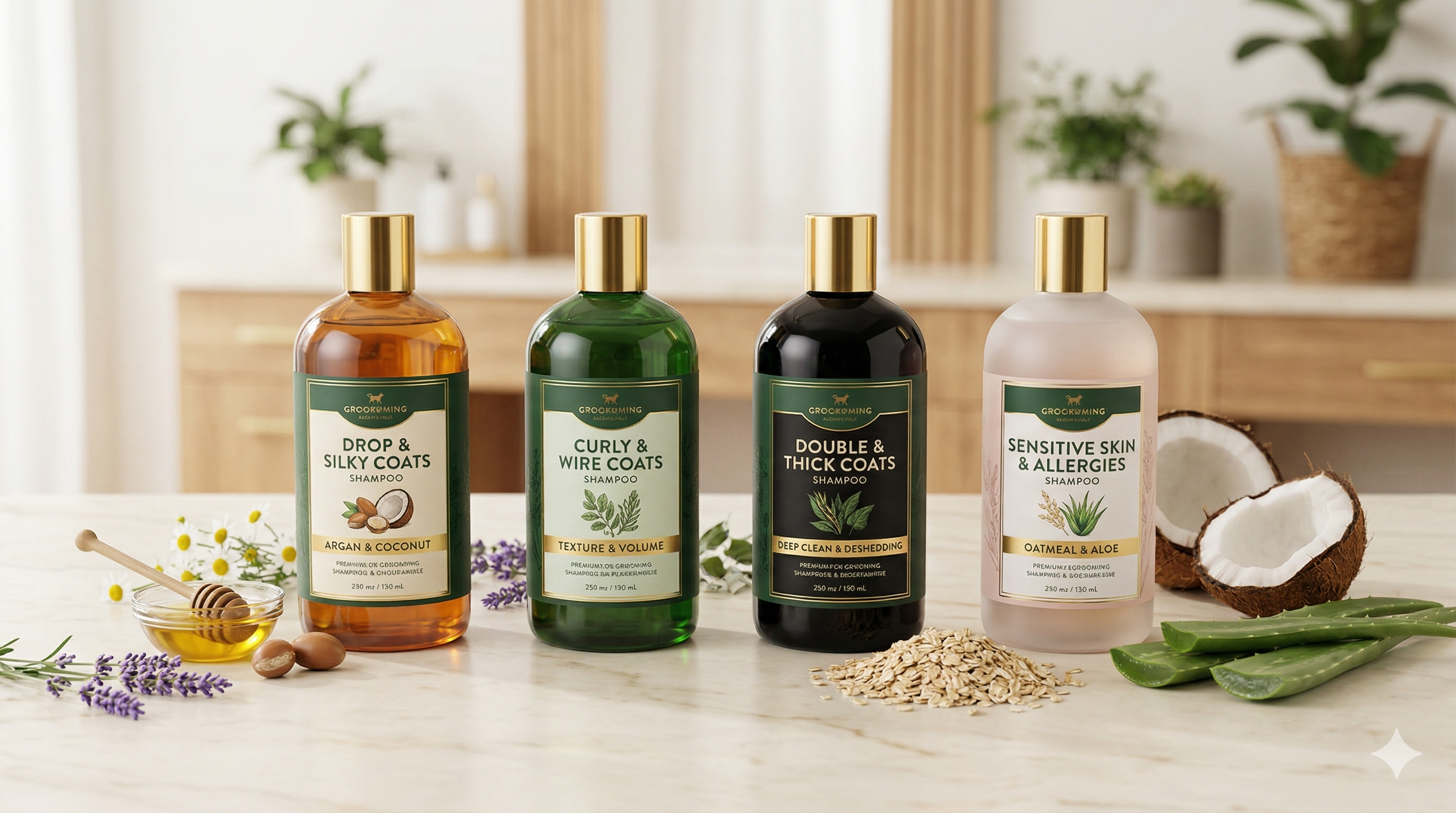
Why One Shampoo Doesn't Fit All
A smooth-coated Staffordshire Bull Terrier has completely different coat needs than a long-haired Cockapoo, which is different again from a double-coated German Shepherd. Using the wrong shampoo for the coat type can leave hair dull, tangled, or fluffy when you want texture. The right shampoo enhances the natural coat, makes grooming easier, and keeps skin healthy.
Professional-grade shampoos are formulated for working groomers. They're concentrated, they work faster, and they deliver results that retail shampoos can't match. Understanding how to match the shampoo to the coat type is what separates competent grooming from excellent grooming.
Understanding Coat Types
Before we talk shampoos, let's be clear about coat types. Breeders and breed standards categorise coats differently, but for grooming purposes, they fall into five main categories.
Smooth and Short Coats
Examples: Staffordshire Bull Terrier, Boxer, Weimaraner, French Bulldog
- Single layer, close to the body
- Usually sheds heavily
- Minimal grooming needs beyond washing and conditioning
- Prone to dry skin if over-shampooed
Double Coats
Examples: German Shepherd, Collie, Golden Retriever, Husky, Corgi
- Dense undercoat with longer guard hairs on top
- Heavy shedders (especially seasonally)
- Requires thorough drying to avoid matting
- Benefits from high-lift shampoos that help separate coat layers
Curly and Wool Coats
Examples: Poodle, Doodle mixes, Bichon Frise, Portuguese Water Dog
- Continuous growth (minimal shedding)
- Prone to matting and tangling
- Benefits from detangling and moisturising shampoos
- Often requires frequent grooming between appointments
Wiry and Rough Coats
Examples: Terrier breeds, Schnauzers, Wire Fox Terrier, Airedale
- Rough, textured outer coat with soft undercoat
- Prone to tangles in the texture
- Benefits from shampoos that maintain texture while softening
- Requires hand-stripping or clipper maintenance
Long and Silky Coats
Examples: Maltese, Shih Tzu, Cavalier King Charles, Afghan Hound
- Long, flowing guard hairs with shorter undercoat
- Tangles easily without proper conditioning
- Benefits from intense conditioning and detangling products
- Shine and flow are hallmarks of proper grooming
Ingredient Guidance: What to Look For
- Natural surfactants: Plant-derived cleansers that are gentler than harsh chemicals
- Proteins: Keratin, silk protein, wheat protein—strengthen and shine hair
- Moisturisers: Glycerin, aloe vera, panthenol—hydrate coat and skin
- Oils: Coconut, jojoba, argan—add shine and reduce static
- Conditioning agents: Silicone or plant-based alternatives—improve texture and manageability
- pH-balanced formulas: Dog skin is more neutral than human skin (pH 6.2-7.4)—properly balanced shampoos don't irritate
- Harsh sulphates (SLS, SLES): Strip natural oils and damage coat
- Artificial fragrances: Can irritate skin, especially on sensitive dogs
- Parabens and formaldehyde: Unnecessary preservatives with potential irritant properties
- Bleach or brightening agents: Damage hair and can cause burning
- Human shampoo: Wrong pH, too harsh for dog skin
Shampoo Selection by Coat Type
For Smooth and Short Coats
Goal: Gentle cleansing without stripping natural oils. Light conditioning to prevent dryness.
Best shampoo type: Mild all-purpose or moisturising shampoo
Key ingredients: Glycerin, aloe vera, natural oils, protein (but not heavy)
Application tip: Over-conditioning short coats makes them look dull. Use a light hand and focus on the skin, not the coat. A good rinse is more important than heavy conditioning.
For Double Coats
Goal: Lift the coat to help dry properly and prevent matting. Strengthen guard hairs. Remove loose undercoat.
Best shampoo type: High-lift or volumising shampoo
Key ingredients: Wheat protein, silk protein, brightening agents (safe ones), texturising polymers
Application tip: Double-coated dogs need thorough drying. Use a shampoo that helps separate the coat layers. Some groomers use a high-velocity dryer with a de-shedding shampoo combination to remove undercoat. Don't condition heavily—it can trap moisture and cause matting.
For Curly and Wool Coats
Goal: Moisturise, detangle, prevent matting. Enhance curl definition without frizz.
Best shampoo type: Moisturising or detangling shampoo
Key ingredients: Intensive conditioners, argan oil, coconut oil, proteins, anti-frizz agents
Application tip: Poodles and Doodles need heavy conditioning. Use a rich, moisturising shampoo and condition generously. Some groomers use a leave-in detangler after conditioning. The curl in these coats comes from moisture—dry them out and they become frizzy and prone to tangles.
For Wiry and Rough Coats
Goal: Maintain texture and hardness while softening undercoat. Define the wiry guard hairs.
Best shampoo type: Terrier or hard-coat shampoo
Key ingredients: Conditioning oils (but not too heavy), texture enhancers, coat stiffeners (safe ones), protein
Application tip: The trick with wiry coats is balance. You want soft skin underneath but want to maintain the hard, wiry texture on top. Use a shampoo designed for the coat type, and use conditioner on the undercoat, not the guard hairs. Some groomers condition only the lower body, leaving the back and sides to dry without conditioning.
For Long and Silky Coats
Goal: Enhance shine, prevent tangles, strengthen long hair, reduce breakage.
Best shampoo type: Luxury or coat-enhancing shampoo
Key ingredients: Silk protein, argan oil, keratin, intensive conditioners, shine-enhancing polymers
Application tip: Long coats need intensive conditioning. Many groomers use a shampoo + separate conditioner + leave-in conditioner combination. The coat needs to move smoothly to prevent tangles. Use a leave-in conditioner spray after grooming to protect between appointments.
Dilution Ratios: Professional Secret
Professional groomers dilute shampoo with water to stretch the product and customise consistency. Most quality grooming shampoos concentrate at 1:8 to 1:16 (1 part shampoo to 8-16 parts water).
- 1:4 ratio: Heavy concentration for very dirty or heavily matted coats. Use sparingly.
- 1:8 ratio: Standard for most grooming. Good cleaning power, economical, easy to rinse.
- 1:16 ratio: Light dilution for puppies, sensitive skin, or light grooming.
Start with 1:8 and adjust based on how the coat feels and how quickly you rinse. A properly diluted shampoo is easier to distribute, rinses faster, and stretches further—saving you money while delivering better results.
Building Your Professional Shampoo Cabinet
Most working groomers have 3-5 shampoos on hand:
- One all-purpose/mild shampoo: For sensitive skin or puppies
- One moisturising shampoo: For double and long coats
- One volumising/high-lift shampoo: For double coats and dirty dogs
- One curl/detangling shampoo: For Poodles, Doodles, and curly coats
- One protein/strengthening shampoo: For damaged, thin, or weak coats
You don't need every specialty shampoo on the market. Choose based on the breeds you groom most. A Poodle specialist needs excellent curl shampoos. A Golden Retriever specialist needs premium double-coat products. A mixed salon needs versatile options.
Professional vs. Retail Shampoos
Professional-grade shampoos are formulated for high-volume use. They're more concentrated, they deliver better results on coat condition, and they're designed for the pace of a working salon.
Retail shampoos (sold in pet stores) are formulated for occasional home use. They're often more heavily diluted, include fillers for volume, and aren't designed for professional results.
The cost difference is smaller than many people think. A £15 professional shampoo diluted 1:8 costs about £0.30 per dog to use. A £5 retail shampoo used undiluted costs about £0.50-0.70 per dog. The professional shampoo delivers better results and is more economical.
Storage and Shelf Life
Professional shampoos last longer than retail products (many last 2-3 years). Store in a cool, dry place away from direct sunlight. Keep lids sealed to prevent evaporation. If a shampoo separates, it's usually fine—shake it and it'll reincorporate. If it smells off or changes colour, replace it.
What We're Sourcing
When Boutique Supply Co launches this spring, we're curating professional-grade shampoos for every coat type. We've tested them. We use them in our own grooming salon. You're not getting generic products—you're getting the shampoos that we've chosen based on working experience with hundreds of dogs.
At trade pricing tiers that grow with your business, you can stock your salon with professional products that deliver results your clients see immediately.