Why Scissors Matter More Than You Think
A good pair of grooming scissors is an investment you'll use thousands of times. Your hands will thank you, your dogs will look better, and honestly, grooming becomes more enjoyable when you're working with tools that feel right. That said, "right" is different for every groomer. Let's break down how to find yours.
Understanding Scissor Types
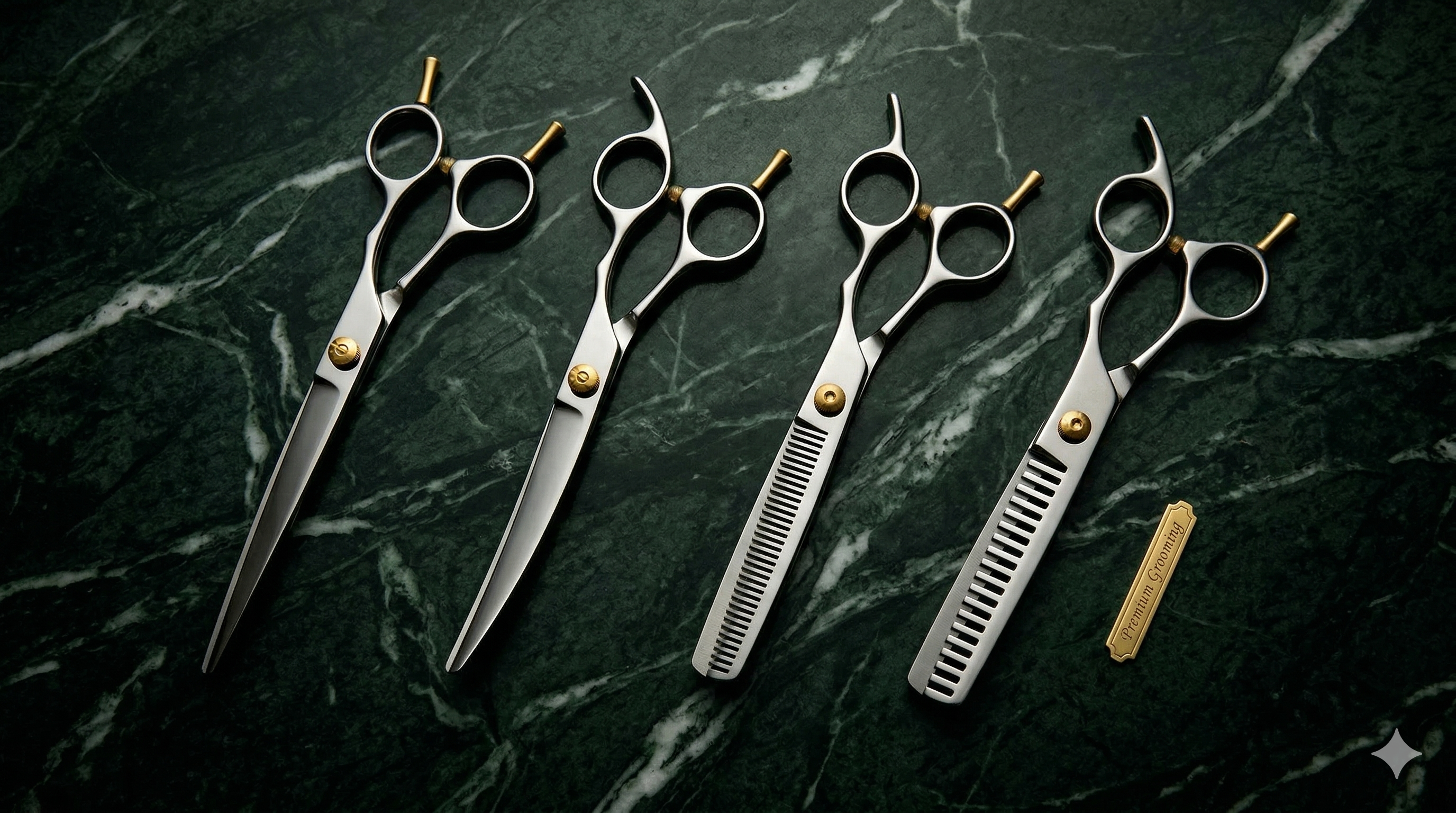
There's no such thing as a one-scissors-does-it-all tool. Different tasks call for different designs, and understanding what each type does is the first step in building a professional arsenal.
Straight Scissors
Your workhorse. Straight scissors are what you'll reach for most of the day—cutting body lines, finishing details, trimming around the face and legs. The straight blade means precise control and the ability to follow natural lines on the dog's body. Look for quality here because these get the most use.
Curved Scissors
Perfect for following the contours of the dog's body. Curved blades help you create smooth lines on rounded areas like the hip and chest. Many groomers find curves essential for finishing work and body sculpting, especially on dogs with pronounced curves (think cockapoos and poodles). They're also gentler around sensitive areas if you develop the right technique.
Thinning Shears and Blenders
If you want seamless blending and to remove bulk without harsh lines, thinning shears are your tool. They have teeth on one or both blades that cut only part of the hair while leaving others intact. This creates a feathered, blended look rather than a sharp line. Invaluable for creating realistic, professional finishes.
Chunkers and Texturizing Shears
Similar to thinning shears but with larger teeth and more aggressive cutting action. Use these to remove significant bulk or create texture and movement in the coat. They're quick and effective for shortening thick, double-coated breeds.
Blunt-Tipped Safety Scissors
Especially important when grooming around the face, ears, and paw pads where one slip could catch skin. Many professional groomers keep a pair on hand specifically for close-up work. They're not just for beginners—they're professional sense.
Steel Quality: Where the Real Difference Lives
This is where budget meets performance. The steel in your scissors determines edge retention, durability, and how the blade feels in your hand.
Japanese steel tends to hold an edge longer and allows for finer, sharper blades. German steel is often heavier and more durable, with slightly thicker blades. Both are excellent—the difference comes down to personal preference and your grooming style.
Stainless Steel
Affordable and low-maintenance, stainless steel resists rust and requires minimal care. The trade-off: it typically doesn't hold an edge as long as higher-quality alloys. Fine for beginners, but many professionals move beyond this.
Japanese High-Carbon Steel
Often considered the gold standard. Japanese scissors tend to be sharper, lighter, and hold their edge exceptionally well. They do require more careful maintenance (proper oiling, avoiding hard water), but most working groomers find them worth the investment.
German Surgical Steel
Known for durability and precision. German scissors are often heavier, which some groomers prefer for control. They're built to last and handle heavier-duty use. Another excellent choice if you prefer a sturdier feel.
Handle Design and Comfort
You'll hold these for six, eight, sometimes ten hours a day. Comfort and ergonomics aren't luxuries—they're necessities.
Offset Handles
The thumb and finger rings are offset from the blade line, which can reduce hand fatigue and wrist strain during long grooming sessions. Many professionals prefer this design, especially those with hand or wrist concerns.
Crane Handles
Curved handles that angle the blade slightly away from the hand. Popular for detailed work and blending. If you find yourself doing a lot of precise, artistic work, crane handles might suit you.
Opposing Handles
The most traditional design, with handles directly in line with the blade. Lightweight and direct, some groomers swear by these for their simplicity and control.
Finger Rest Design
Pay attention to where your pinky finger sits. Poor finger rest design leads to hand fatigue and cramping. A good pair should feel balanced and natural in your hand from the first use.
Size and Weight Considerations
Scissors range from about 5 inches to 8 inches in length. Larger scissors cut bigger sections faster; smaller ones offer more control for detail work. Most professionals own multiple sizes.
- 5 to 6 inches: Precision work, tight areas, detail finishing
- 6.5 to 7 inches: The sweet spot for most groomers—versatile all-rounders
- 7.5 to 8 inches: Body work, faster cutting on larger areas
Weight matters too. A heavier scissor gives you more cutting power with less effort, which sounds great until you realise the added fatigue after eight hours of holding it. Most professionals prefer something in the middle—substantial enough to cut efficiently, light enough to not weigh down the hand.
The Cut Test: Never Skip This
Theory is useful, but the real test happens in your hand. Before investing in a new pair, ask yourself:
- Does the blade glide smoothly or does it feel sticky?
- Can you hear a sharp snip, or is it a dull sound?
- Do the handles feel balanced?
- Can you cut a single hair cleanly without crushing it?
A quality pair should feel responsive and make a clean, sharp sound. If you're cutting dog hair (not paper), the scissor should glide through with minimal effort. This is what separates professional tools from budget options.
Maintenance Extends Your Investment
Once you've found your scissors, keep them sharp. Dull blades are more dangerous (you'll apply pressure and risk slipping), they create split ends in the coat, and they're tiring to use.
Daily: Wipe blades with a clean, dry cloth after each dog. Weekly: Apply a drop of quality scissor oil to the pivot point. Every 4-6 months: Professional sharpening. Never let scissors get dull enough that you're straining to cut.
Building Your Professional Arsenal
Most working groomers own between three and six pairs of scissors, each serving a specific purpose:
- One or two high-quality straight scissors for general work
- Curved scissors for body contours
- Thinning or blending shears for finishing
- Blunt-tipped safety scissors for close face work
- A backup pair for emergencies
Start with one excellent pair—a quality 7-inch straight scissor in a steel you trust. As you develop your technique and style, you'll naturally gravitate toward the other types you need. Don't rush to buy everything at once. Give yourself time to understand what your hands prefer and what your grooming style demands.
What We're Launching With
When Boutique Supply Co launches this spring, we're curating a carefully selected range of professional grooming scissors. We've tested them ourselves. We know they cut clean, feel good in the hand, and hold their value. You're not paying for a brand name you've never heard of or marketing hype—you're investing in tools we actually use in our own grooming practice.
We're offering these at trade pricing tiers that reward loyalty and growth. Whether you're stocking a one-person salon or managing a team of groomers, there's a tier that makes sense for your business.