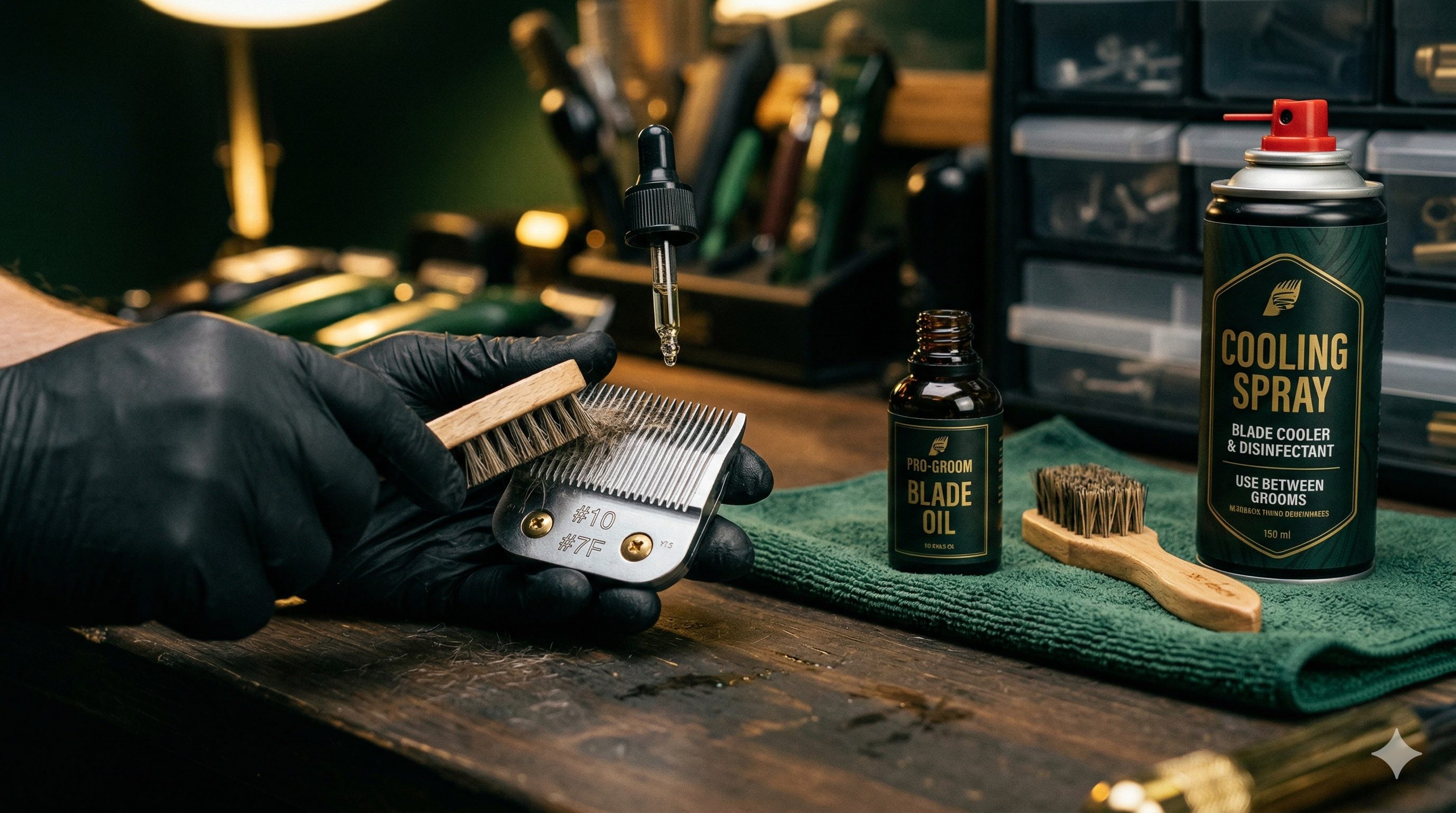
Why Blade Maintenance Matters
Your clipper blades do hundreds of thousands of cuts every week. They get dull. Hair gets packed in. They heat up. They rust. A professional-grade blade is a significant investment, and the difference between a maintained blade and a neglected one is the difference between three months of life and three years.
More importantly, a dull blade hurts dogs. Clipper burn happens when friction from a dull blade heats the skin. Rough cuts can cause clipper irritation or nicks. A sharp blade glides through the coat cleanly and quickly, making the whole experience safer and more comfortable.
Daily Cleaning Routine
This is the foundation. Hair builds up in the blade every single time you use the clipper. That buildup dries, compacts, and starts to rust.
After Every Dog
Ideally, clean your blades between dogs. This takes 30 seconds.
- Unplug the clipper (safety first)
- Use an old toothbrush or small blade brush to gently brush the blade from side to side, loosening hair that's packed in the teeth
- Wipe with a clean, dry cloth to remove loose hair
- If you see rust starting or stubborn hair buildup, soak the blade in a blade cleaner solution for 5-10 minutes, then brush again
That's it. It takes less time than it would take to fix a clogged blade or deal with a rusty one.
At the End of the Day
After your last dog, do a thorough clean:
- Brush the blade thoroughly to remove all hair
- Wipe completely dry
- If your blades have been clipped into a clipper all day, remove them and store separately
- Store in a dry place away from humidity
Invest in a blade cleaning solution. A proper solution cuts through buildup much faster than water alone. Brands designed for professional grooming clippers are worth the cost and available at most grooming supply shops.
The Oiling Ritual
Once the blade is clean and dry, oil it. This is non-negotiable if you want your blades to last.
How Often?
For blades you use every day, oil them daily—ideally at the end of your grooming day before you store them. For blades you rotate in and out, oil before storing and before use.
How to Oil
- Get a quality clipper blade oil (not general-purpose machine oil—use oil formulated for clipper blades)
- Place one drop of oil on the blade teeth
- Work it in by gently brushing the blade a few times
- Wipe away any excess with a clean cloth
- If the blade is in a clipper, run the clipper for a few seconds to distribute the oil
The oil prevents rust and keeps the blade moving smoothly. Without it, the blade surface oxidises and the cutting edge dulls faster.
Cooling Sprays: Handle Heat Buildup
Clipper blades generate heat from friction. Extended grooming sessions, especially on thick double coats, heat the blade significantly. A hot blade is uncomfortable for the dog and accelerates dulling.
When to Use Cooling Spray
- During long grooming sessions (every 15-20 minutes of continuous clipping)
- When clipping thick, dense coats (double-coated breeds)
- If the blade feels warm to the touch on your wrist
- Before close-work near sensitive areas like the face or paws
How to Apply
Most cooling sprays come in a can with a nozzle. Hold the blade up (away from the dog) and spray for 2-3 seconds. The liquid evaporates rapidly, cooling the blade through evaporation. Wait a moment (a few seconds) before going back to clipping so the excess moisture dries.
Never spray cooling solution directly onto a dog's skin. The extreme cold can cause discomfort. Always test the blade temperature on your own wrist first to get a feel for when cooling is needed.
Sharpening vs. Replacing: When to Do What
This is the question every groomer faces: can I sharpen it, or should I replace it?
Signs It's Time to Sharpen
- The blade doesn't cut as cleanly as it used to—you're having to go over areas twice
- It pulls hair slightly instead of cutting it
- You notice clipper irritation even on dogs with sensitive skin
- The blade is still structurally sound (no visible damage, gaps, or rust)
A professional sharpening can restore a good blade to nearly new condition. Most working groomers send blades in for sharpening every 4-6 months, depending on usage. A proper sharpening costs £10-20 per blade and can extend the blade's life by years.
Signs It's Time to Replace
- Visible rust that doesn't come clean with gentle scrubbing
- Gaps or chips in the blade teeth
- The blade has been dropped or bent
- It's been sharpened multiple times and is getting noticeably thinner
- You've had it for 3+ years of heavy use
Replacement blades aren't cheap, but a damaged blade that drags, pulls, or causes discomfort is worse than investing in a new one. False economy is always expensive when it comes to tools that touch animals.
Storage Matters
How you store your blades between uses makes a real difference.
The Right Way
- Store blades in a clean, dry place—humidity is the enemy
- If storing for more than a week, apply a thin coat of oil beforehand
- Keep blades in a blade case or organised container, not loose in a drawer
- Store away from heat sources, direct sunlight, and moisture
- If you remove blades from the clipper, store them separately to prevent the clipper's heat from transferring to the blade
The Wrong Way
- Leaving clipped blades in the clipper overnight (heat + moisture = rust)
- Storing in a damp bathroom or near water sources
- Stacking blades loose without protection—they can chip or dull each other
- Leaving wet blades to air dry (wipe them completely dry immediately)
Common Mistakes We See
Not Cleaning Between Dogs
This is the biggest one. Five seconds per dog saved adds up to rust and buildup that takes ten minutes to clean later. Not a good trade.
Using the Wrong Oil
General-purpose machine oil, cooking oil, or household lubricants aren't formulated for clipper blades and can leave residue or attract dust. Invest in proper clipper blade oil.
Waiting Too Long to Sharpen
Many groomers run a dull blade for months because they're waiting for a convenient time to send it in. Meanwhile, the blade is causing clipper burn and poor finishes. Keep a rotation of blades so you're never without a sharp one while another is being sharpened.
Soaking in Water
Never soak clipper blades in plain water for extended periods. Water alone doesn't have rust inhibitors and can actually cause rust. Use a proper blade cleaning solution instead.
Building a Sustainable Rotation
The professionals we know don't work with one blade—they work with a rotation. Here's a practical approach:
- 3-4 daily blades: A rotation so one can be sharpened while the others are in use
- A backup blade: In case of damage or emergency
- Every 4-6 months: Send one blade in for professional sharpening while rotating the others
This way, you're never waiting for a blade or tempted to work with a dull one. The sharpening cost is spread across time and usage, making it more manageable than buying a new blade every few months.
What We're Sourcing
When Boutique Supply Co launches this spring, we're curating professional-grade clipper blades alongside the cleaning solutions, oils, and cooling sprays we use in our own salon. We've tested them. We know they hold an edge, take a good sharpening, and last through proper care.
We're offering blade care products at trade pricing tiers so you can maintain your tools without breaking the budget. Because a maintained blade is a safe blade, and safe tools are what every dog deserves.